Cottonwood Point Wilderness
Hosted by Bureau of Land Management
New listing
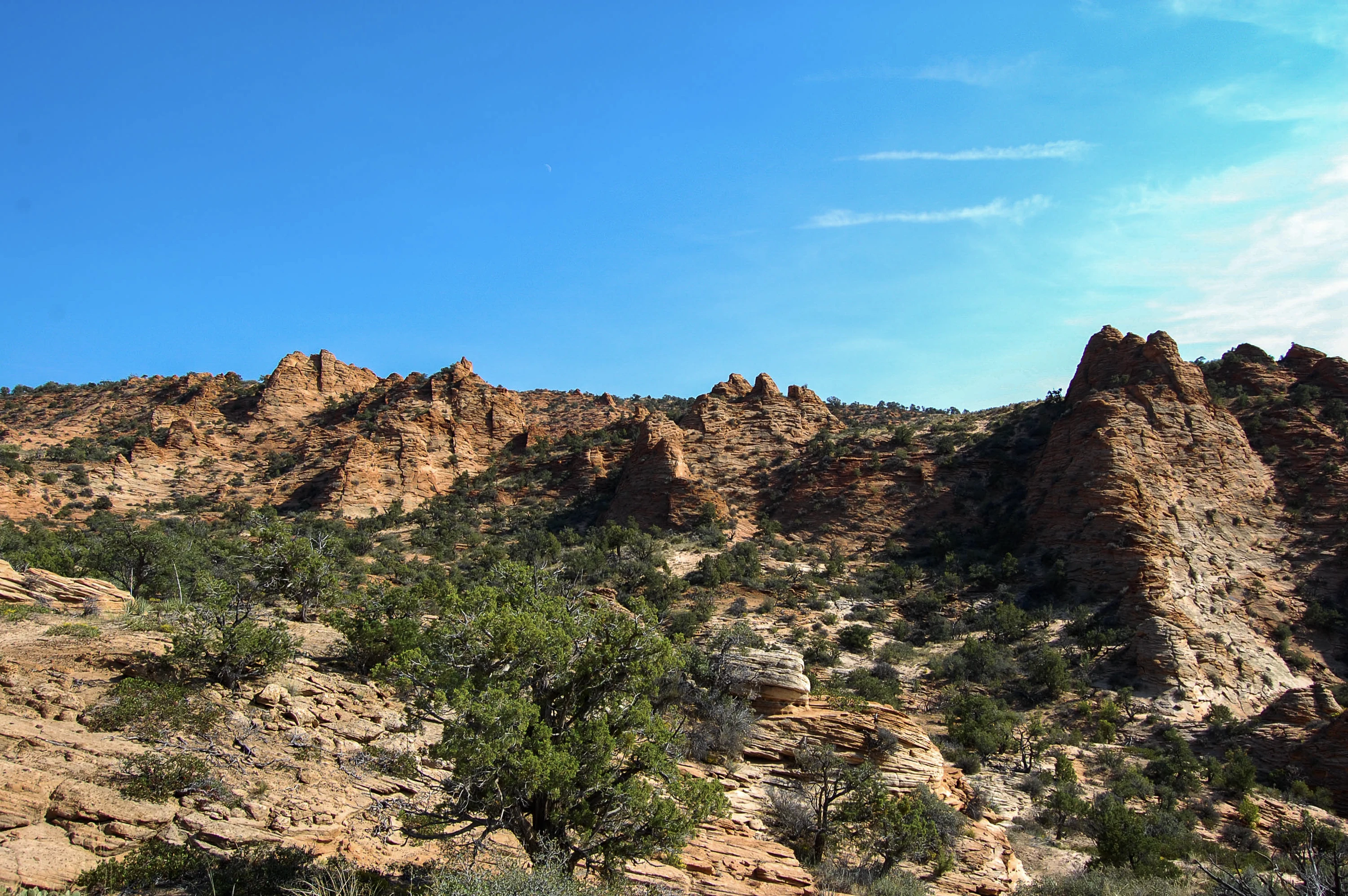
On a map, this piñon-, juniper- and sagebrush-covered Wilderness looks like two small "peninsulas" divided by Cottonwood Canyon. Extending south from the Arizona-Utah border, the land rises to 6,322 feet on Cottonwood Point itself, at the lower end of the western peninsula, where craggy pinnacles and 1,000-foot cliffs of multicolored Navajo sandstone cap an irregular plateau. Between the crags lie deep and narrow canyons, the wetter ones filled with willow and cottonwood. Mule deer, bobcat and mountain lions hide in this area, and coyotes lift their voices to splendid moonlit nights. The source calls it a convoluted, rugged country "reminiscent of the landscapes of Zion National Park." Immediately to the north lies Utah's Canaan Mountain Wilderness. Without trails, Cottonwood Point receives few human visitors — a prime opportunity for quiet canyon backpacking, hiking and horsepacking. Elevations within the Wilderness range from about 5,100 to 6,600 feet, and the area receives approximately 14 inches of annual precipitation. The higher elevations generally get much more precipitation and much cooler temperatures than the lower ones. Summers at high elevations bring warm daytime temperatures with cool nights, while low elevations often experience very hot summer temperatures; afternoon thunderstorms are common in summer. Winter and early spring bring snow and sometimes cold temperatures to the highest elevations but frequent clear, sunny days, and winter temperatures are more moderate at low elevations — a good time to visit those snow-free areas, with both winter and summer activities available within very short distances.
Location
Reviews
No reviews yet.
Bureau of Land Management
- 0
- Reviews