Hakalau Forest National Wildlife Refuge
Hosted by Fish and Wildlife Service
New listing
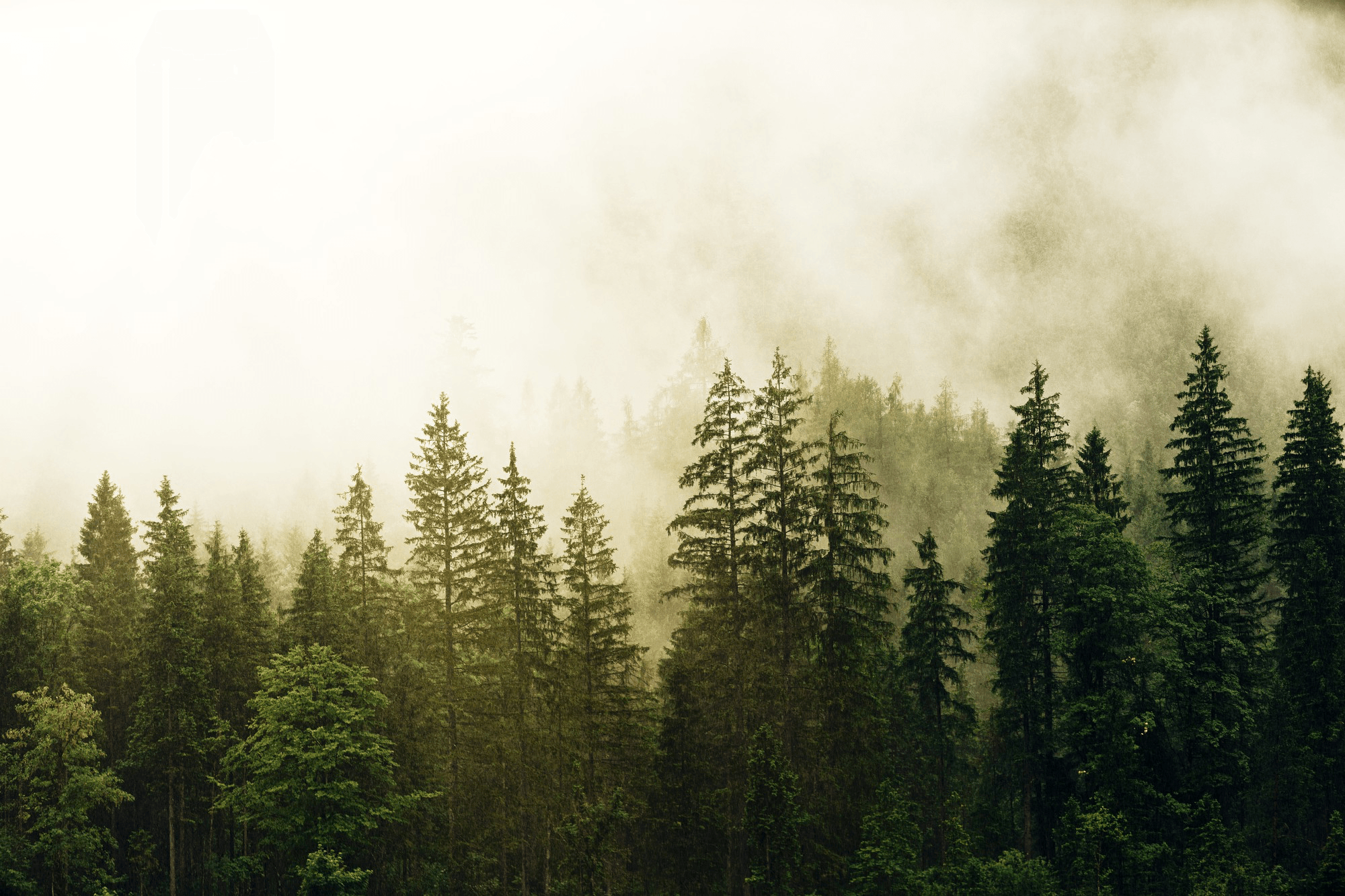
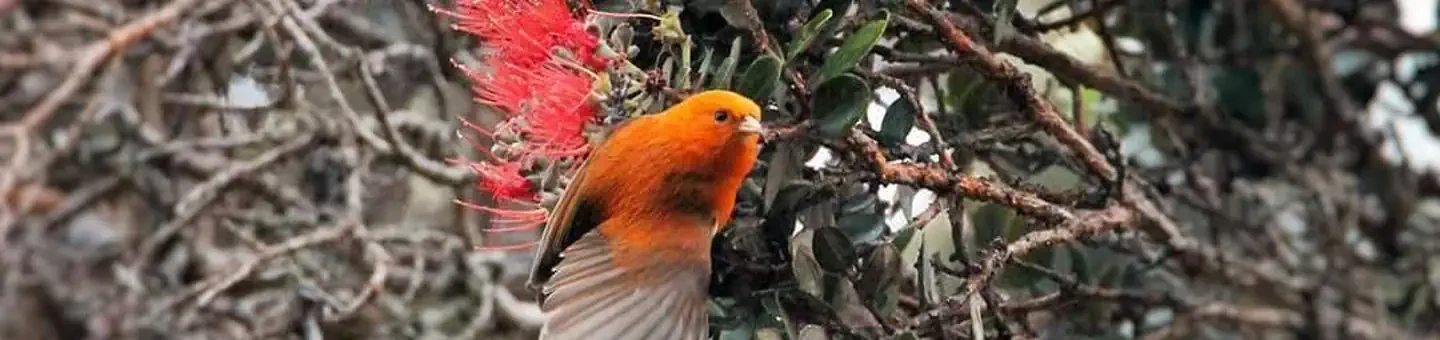
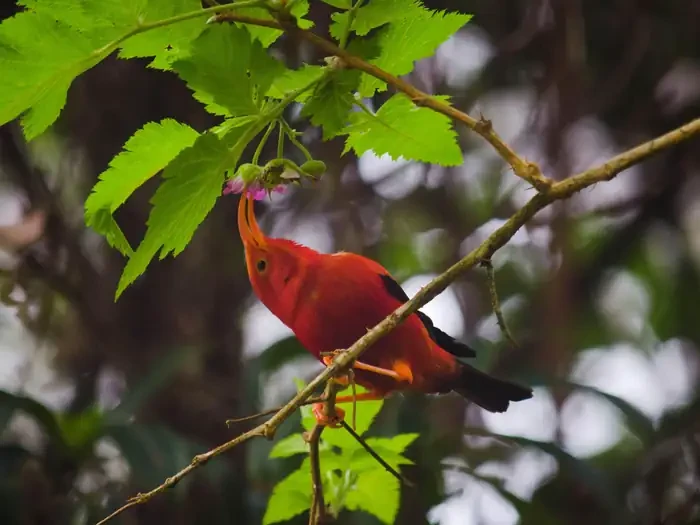
Hakalau Forest NWR contains some of the finest remaining stands of native montane rain forest in Hawai‘i. The slopes below 4,000 feet receive very high rainfall — 250 inches annually — and bogs, fern patches, and scrubby forest dominate this area, dissected by numerous deep gulches. Rainfall decreases to about 150 inches above 4,500 feet, where majestic koa and red-blossomed ‘ōhi‘a trees form a closed-canopy forest. Above 6,000 feet, rainfall drops to 100 inches or less and native forest merges into abandoned pastureland where alien grasses and weeds, introduced as forage for cattle, dominate. Since 1989, over 400,000 koa, ‘ōhi‘a, and other native plants have been planted there as part of the refuge's reforestation program. In 1997, the U.S. Fish and Wildlife Service purchased approximately 5,300 acres to create the Kona Forest Unit, which includes lands within the Ho‘okena and Kalahiki land divisions on the western slopes of Mauna Loa, at elevations between 2,000 and 6,000 feet. It lies approximately 23 miles south of Kailua-Kona. Between 2,000 and 3,600 feet, the Kona forest is predominantly ‘ōhi‘a with an understory of nonnative trees and shrubs such as christmasberry, clidemia, and strawberry guava. Above 3,600 feet the invasive trees and shrubs drop out and the forest is dominated by ‘ōhi‘a and koa with an understory of ferns and native flora. A remnant of dry ‘ōhi‘a forest is found at the highest elevations and includes sandalwood and māmane. The primary purpose of the Kona Forest Unit is to protect, conserve, and manage this native forest for threatened and endangered species. Of particular concern was the ‘alalā (Corvus hawaiiensis), whose wild population, known only from the west side of the Big Island, was observed intensively after 1993 as it declined to a single pair in 2002, with none seen after June of that year. As of 2008, approximately 50 ‘alalā were in captivity at the Keauhou and Maui Bird Conservation Centers. Once the unit is fenced, feral ungulates removed, and vegetation and habitat restored, progeny from these captive birds may be released here. The unit also offers protected areas for other endangered species, including the Hawai‘i ‘ākepa, Hawai‘i creeper, ‘akiapōlā‘au, ‘io (Hawaiian hawk), and ‘ōpe‘ape‘a (Hawaiian hoary bat), as well as several endangered plants and an insect.
Location
Site features
Environmental Education
Reviews
No reviews yet.
Fish and Wildlife Service
- 0
- Reviews